
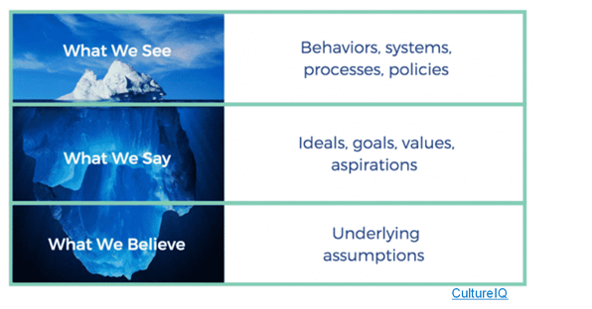
Organizational culture can be visualized as an iceberg, consisting of three interconnected layers:
1. Behaviors, Systems, Policies, and Processes
- Represent the visible aspects of how things are done within the organization.
2. Ideals, Goals, Values, and Aspirations
- Defined by leadership, these elements set the direction and purpose of the organization.
3. Underlying Assumptions
- The unseen foundation of culture that guides behaviors and decision-making.
Leadership’s Role in Shaping Culture
A leader’s influence can create one of three general culture types, each with distinct impacts on the organization:
1. Constructive Culture
- Characteristics:
Encourages organizational goals through people development, promotes teamwork and synergy, and enhances adaptability and effectiveness at all levels. - Impact:
Fosters collaboration, innovation, and sustainable success.
2. Aggressive/Defensive Culture
- Characteristics:
Focuses on individual needs over the collective, creating stress, high turnover, and inconsistent performance. - Impact:
Prioritizes short-term gains at the expense of long-term organizational health.
3. Passive/Defensive Culture
- Characteristics:
Subordinates individuals to rigid systems, stifles creativity, and discourages initiative. - Impact:
Limits growth and allows the organization to stagnate.
Organizational success depends on aligning leadership influence with a constructive culture, nurturing a foundation of trust, collaboration, and continuous improvement.
Sources: CultureIQ, HumanSynergisticsCircumplex

 ramonamills.com
Leave a comment