
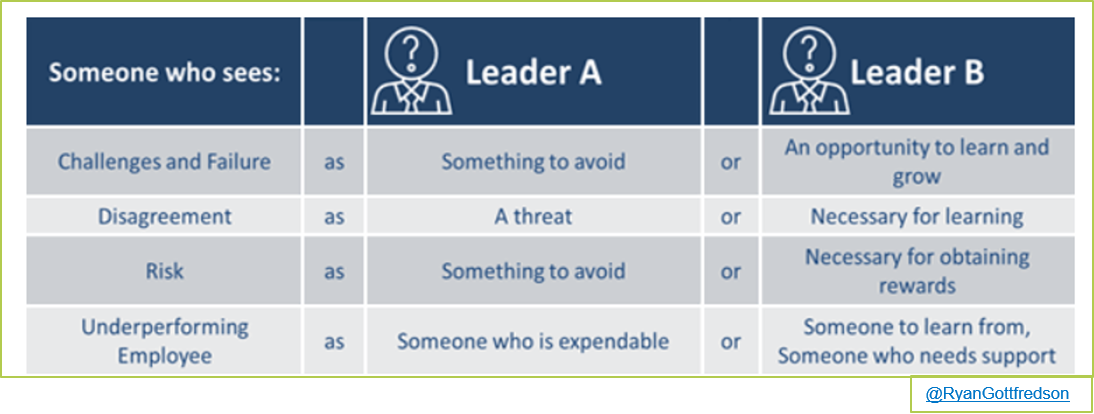
The mindset of a leader defines their approach to challenges, decisions, and relationships. While influential leaders drive growth and inspire teams, dysfunctional leaders are held back by damaging beliefs. Here are five common mindsets that undermine effective leadership:
1. Fixed Mindset: “They need to change. I am just fine.”
- Impact: Leaders with a fixed mindset resist personal growth, assuming others must adapt while they remain stagnant.
- Solution: Embrace self-reflection and continuous improvement, recognizing that leadership requires adaptability.
2. Closed Mindset: “I’m going to ignore this feedback because they just don’t understand me.”
- Impact: Rejecting feedback alienates teams and creates blind spots in leadership.
- Solution: Cultivate a growth-oriented attitude by seeking constructive feedback and using it to refine your approach.
3. Victim Mindset: “I’m not going to change because that’s just the way I am.”
- Impact: Leaders trapped in this mindset deflect accountability and resist evolution, hindering team progress.
- Solution: Shift from a fixed perspective to one that embraces growth and responsibility for outcomes.
4. People Pleaser Mindset: “I want and need everyone to like me.”
- Impact: The desire for approval leads to indecisiveness and ineffective conflict resolution.
- Solution: Prioritize respect over popularity by making balanced, fair decisions that uphold the organization’s goals.
5. Fear-Driven Mindset: “I’m going to wait for an opportunity to come to me.”
- Impact: Hesitation rooted in fear limits innovation and hinders proactive leadership.
- Solution: Act boldly and take calculated risks, trusting your vision and judgment to create opportunities.
Transformative leaders recognize the power of mindset in shaping their influence and effectiveness. By addressing these damaging beliefs and adopting a growth-oriented approach, leaders pave the way for personal and organizational success.
Reference: Moberly Monitor – Tony Richards

 ramonamills.com
Leave a comment