
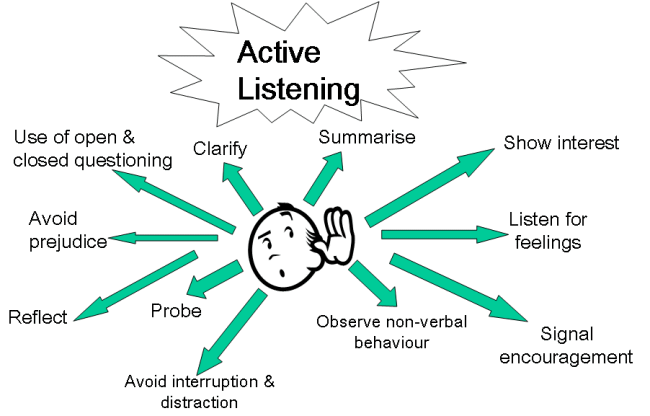
Listening is one of the hardest skills to master because it requires suppressing our #ego long enough to truly consider what’s being said before responding. When someone begins speaking, our minds often default to these behaviors:
1. Predicting Their Words
- E.g., “I know what you’re going to say.”
- Example: Imagine a team member starts sharing a concern during a meeting. Before they finish their sentence, the leader interrupts with, “I know this is about the new software update.” In reality, the concern was about communication gaps, not the software. By predicting inaccurately, the leader stifles the conversation and overlooks valuable input.
- Solution: Let others complete their thoughts before forming conclusions. Use active listening cues like nodding or paraphrasing to stay engaged.
2. Identifying a Pattern
- E.g., “I know where you’re going with this.”
- Example: During a brainstorming session, someone shares ideas for improving a process. The listener quickly assumes they’re repeating a similar suggestion made earlier and dismisses it. In truth, the idea offered a fresh perspective that could have been valuable.
- Solution: Approach each conversation with curiosity, recognizing that even familiar patterns may reveal unique insights.
3. Searching for Disagreement
- E.g., “That’s wrong.”
- Example: A colleague proposes an unconventional strategy during a project discussion. Instead of considering the proposal fully, the listener immediately focuses on why it won’t work. The conversation turns into a debate rather than a collaborative effort.
- Solution: Avoid responding defensively; instead, ask clarifying questions to understand the reasoning behind the suggestion.
Reframing the Conversation
A conversation isn’t a race to make a point; it’s an opportunity to explore someone else’s mind. For example:
- Instead of jumping in with a counterpoint during a debate, pause and ask questions like, “What led you to think that?” or “Can you elaborate on this idea further?” This approach invites deeper dialogue.
- In a one-on-one setting, try restating what the speaker has said: “I hear you saying that communication gaps are impacting team morale, did I get that right?” This validates their perspective and encourages collaboration.
You don’t have to agree, and you’re not obligated to fully understand. Just listen.
True listening requires curiosity, patience, and the willingness to step outside your own narrative. By doing so, you create space for genuine connection and meaningful dialogue.
FS BrainFoodNo.356

 ramonamills.com
Leave a comment