
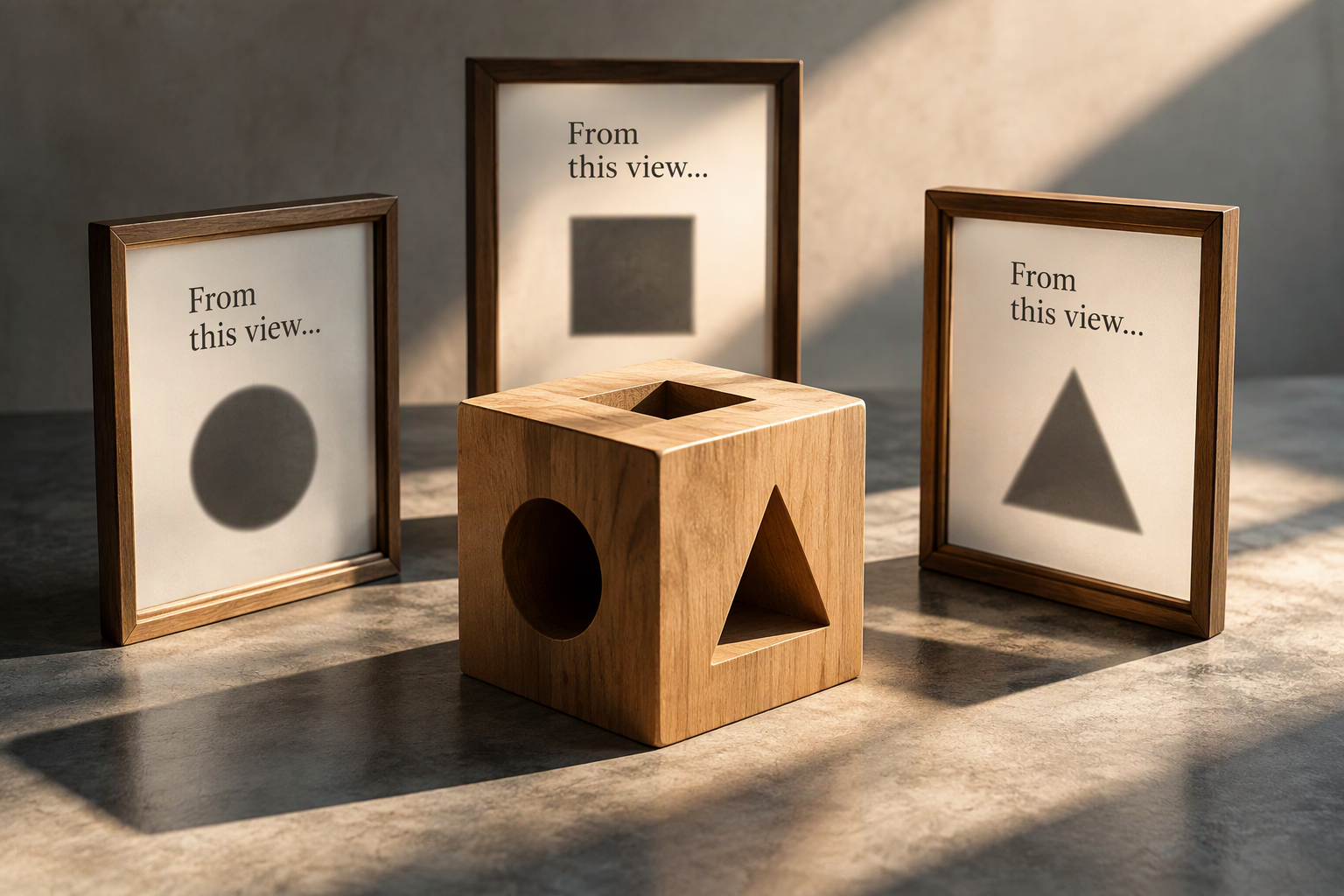
Two people can walk away from the same meeting with completely different stories.
One thinks:
That was a disaster.
Another thinks:
That was productive.
Same meeting.
What happened in the room didn’t change. What each person noticed, expected and interpreted did.
That’s perspective.
Separate What Happened From What You Made It Mean
Suppose you present an idea and your leader asks several tough questions.
One interpretation:
They hated it.
Another:
They’re interested enough to pressure-test it.
Neither is automatically true.
Start with what you actually know:
Several questions were asked about the idea.
That’s the fact.
Everything after that needs more information.
This is where perspective becomes useful. Before deciding what an experience means, look through three lenses:
→ What happened? Stick to what you can reasonably verify.
→ What am I interpreting? Notice the story you’ve added.
→ What else could be true? Make room for another explanation.
You may eventually decide your first interpretation was right.
You may also discover it wasn’t the only possibility.
Perspective Doesn’t Require Positivity
A different perspective doesn’t mean finding the bright side of everything.
Some situations are disappointing.
Some decisions are unfair.
Some experiences hurt.
Perspective gives us enough distance to see whether we’re responding to what happened or to the meaning we immediately attached to it.
That distinction can change a conversation, a relationship or the decision that comes next.
The next time something gets under your skin, pause before writing the entire story.
Start with what you know. Then decide what the facts can actually support.


Leave a Reply