
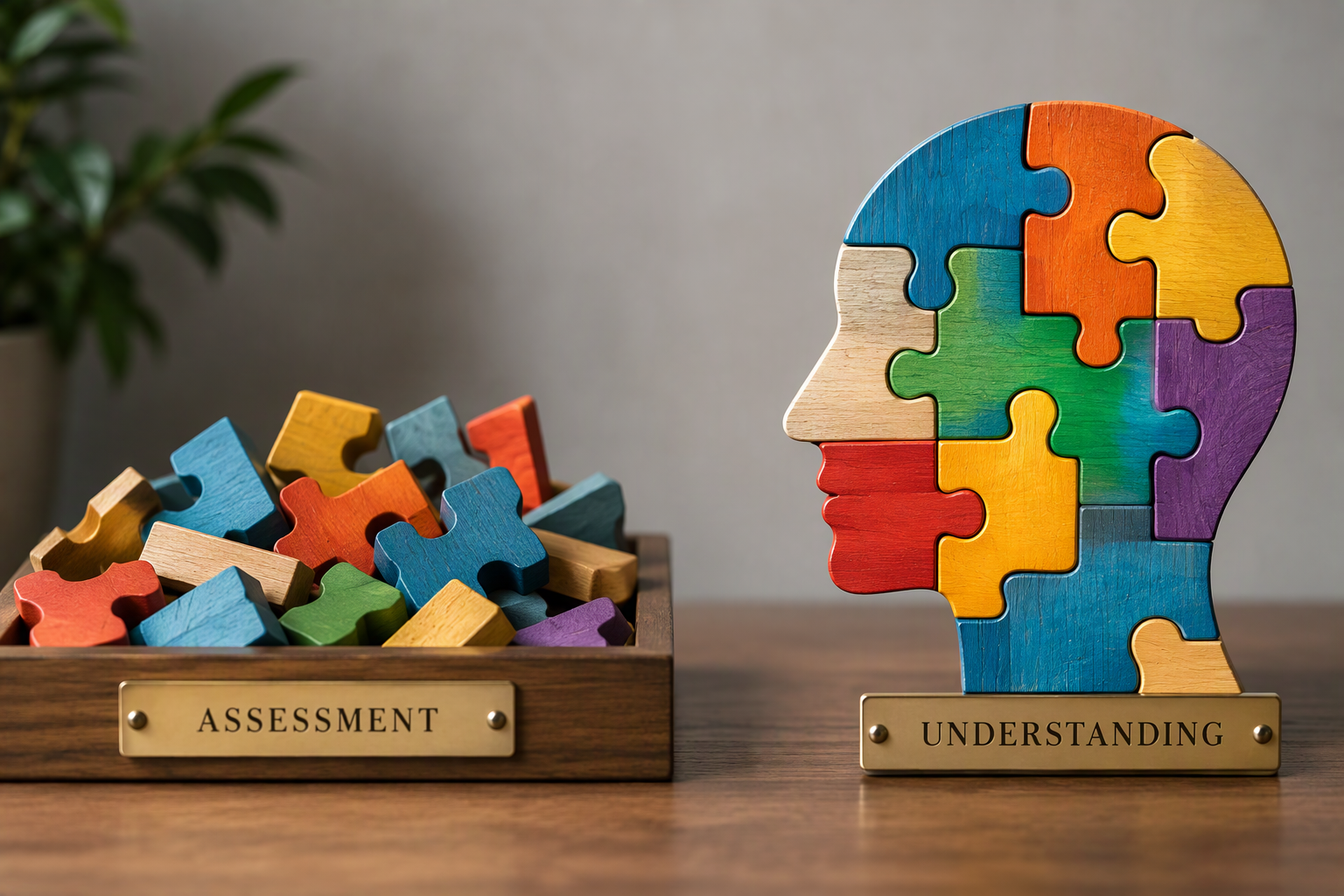
I’ve taken my share of personality assessments over the years, and I’ll admit there is something fascinating about reading a report that seems to know things about you.
That’s definitely me.
Then you reach another section and think:
I’m not so sure about that one.
That response is probably healthy.
Personality assessments can give us a language for patterns we recognize in ourselves: how we communicate, approach decisions, respond to pressure or work with other people. Used well, they can start conversations that might not otherwise happen.
Problems begin when the results stop being information about a person and become the definition of a person.
Someone is labeled an introvert, so we assume the person won’t thrive in sales. Someone scores highly on dominance, so difficult behavior gets excused as “that’s just how they are.” An assessment suggests someone prefers stability, and suddenly that person is overlooked for an opportunity requiring change.
That’s an enormous amount of authority to give a report.
Use the Assessment. Keep the Person.
I have worked with tools such as DISC, which can give people a common vocabulary for discussing behavioral preferences. The value isn’t in memorizing colors or putting people into boxes. It’s in recognizing tendencies and becoming more intentional about how those tendencies affect others.
A result might help you notice:
→ I make decisions quickly. Do I leave enough room for other voices?
→ I value detail. Do I sometimes overwhelm people with it?
→ I prefer time to process. Have I explained that to people who expect an immediate answer?
Now the assessment is doing useful work.
It’s creating curiosity, not a conclusion.
And people change. Context affects behavior. Experience changes us. Someone may respond very differently during a crisis than during an ordinary Tuesday.
No assessment captures all of that.
So take the assessment. Learn the language. Notice what resonates and question what doesn’t. Then compare the report with the much richer evidence available from actually living, working and relating to other people.
A personality assessment can offer a useful lens.
Just don’t mistake the lens for the whole person.


Leave a Reply